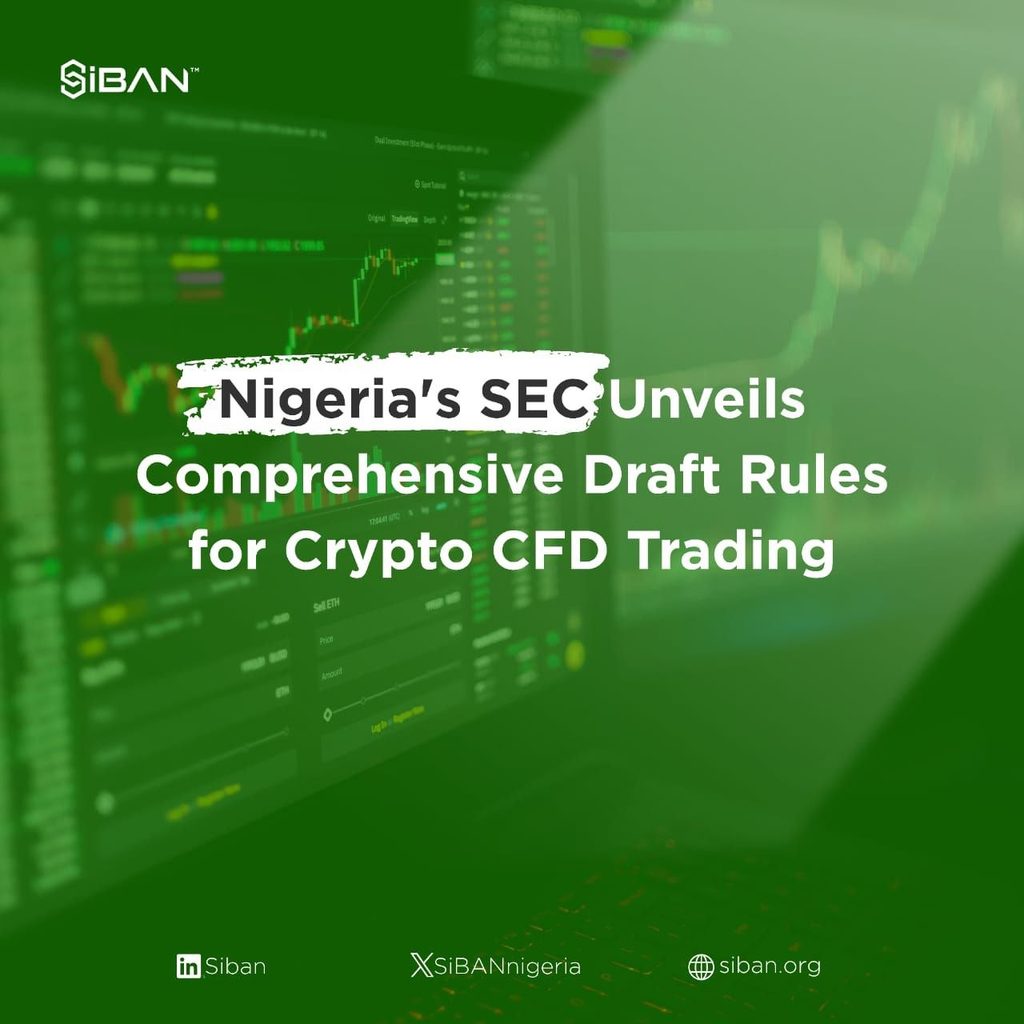
The Securities and Exchange Commission (SEC) has released its first dedicated regulatory framework for online forex trading and Contracts for Difference (CFDs) in Nigeria, a sweeping set of rules that will reshape how brokers, introducing brokers, and technology providers operate in, or market to, the Nigerian retail trading space. For SiBAN's community, several provisions directly touch the crypto and digital-asset ecosystem, particularly around leverage limits on crypto-linked CFDs and marketing conduct.
Who the Rules Apply To?
The framework casts a wide net, covering Introducing Brokers, Online Forex Brokers/Broker Dealers, and Technology and Platform Providers. Critically, it also reaches offshore entities that target Nigerian residents whether by listing Nigeria as a supported country, marketing through Nigerian influencers, using Naira references, or maintaining local representatives. An offshore platform cannot avoid the Rules simply by being incorporated elsewhere.
Registration and Capital Requirements
No person may carry on forex/CFD brokerage, introducing broker, or platform-provider activities without SEC registration, across three license categories: Online Forex Broker/Dealer, Introducing Broker, and Technology/Platform Provider. The capital thresholds are steep:
- Market Maker/B-Book brokers: ₦3 billion minimum paid-up capital
- STP/ECN A-Book brokers: ₦2 billionTechnology/Platform Providers: ₦5 billion
- Introducing Brokers: ₦30 million (individual) / ₦150 million (corporate)
Applicants must also pass “fit and proper persons” checks, keep at least two Nigeria-resident directors including the CEO, and for brokers maintain at least 30% Nigerian citizen ownership of paid-up share capital.
Prohibited Products and Practices
The Rules ban binary options for retail clients, contracts with a maturity under one hour, the Percentage Allocation Management Model (PAMM), unauthorized liquidity providers, and misleading copy-trading representations. Naira-denominated currency pairs are also barred without prior SEC written approval.
Marketing and Advertising Rules
This section carries the most relevance to Nigeria's broader digital-asset marketing culture. Directors and promoters are barred from displaying luxury lifestyles that imply wealth was generated through trading. Celebrity and influencer endorsements now require prior SEC approval and must clearly disclose their commercial nature. All adverts must be filed with the SEC before publication, balance any profit claims with equally prominent risk disclosures, and display the entity's name and license number. Cold-calling retail clients is prohibited unless they've previously expressed interest.
Investor Protection Measures
- Negative balance protection: retail accounts can never lose more than the funds deposited, the broker must restore any negative balance to zero, at its own cost.
- Mandatory risk warning: a standardized disclosure, including the live percentage of losing retail accounts, must appear prominently on every licensee's website and app.
- Segregated client funds: held in CBN-licensed banks as “Client Trust Accounts,” reconciled daily, and never used to satisfy the broker's own debts.
- Investor Protection Fund: all regulated entities must jointly establish and maintain a collective fund under the Investments and Securities Act (ISA) 2025.
What This Could Mean for the Industry
- Fewer, bigger players. The scale of the capital requirements up to ₦5 billion for technology providers will likely push out smaller and newer platforms, consolidating the market around well-capitalized brokers and forcing many current operators to restructure, partner, or exit.
- Crypto CFD trading gets squeezed. A 1:2 leverage cap makes Nigeria one of the most conservative jurisdictions globally for crypto derivatives. Expect reduced appetite for crypto CFDs on regulated platforms, with some demand likely to migrate to spot crypto trading or unregulated offshore platforms, testing how effectively the SEC can enforce its extraterritorial reach.
- Offshore brokers face a choice. International platforms that currently serve Nigerian clients without local registration will need to either register under these Rules or withdraw from the market, reshaping which brokers Nigerians can legally access.
- A visible shift in marketing culture. The clampdown on influencer-driven promotion and “lifestyle” marketing will change the look and feel of forex and crypto advertising across Nigerian social media an area where SiBAN's community has significant visibility and influence.
- Better odds for retail traders. Negative balance protection, mandatory risk disclosures, and lower leverage on volatile products are designed to reduce the scale of retail losses that have long characterized Nigeria's forex and CFD market.
SiBAN's Take
This framework fits the broader regulatory trajectory SiBAN has tracked through 2026 from the NRS virtual asset taxation guidelines to the SEC's earlier sanctions directives of Nigerian regulators moving from reactive enforcement to detailed, product-specific rulebooks. The 1:2 leverage cap on crypto CFDs, paired with tightened controls on influencer marketing, signals that Nigerian authorities intend to regulate crypto-adjacent products with more caution than traditional forex instruments.