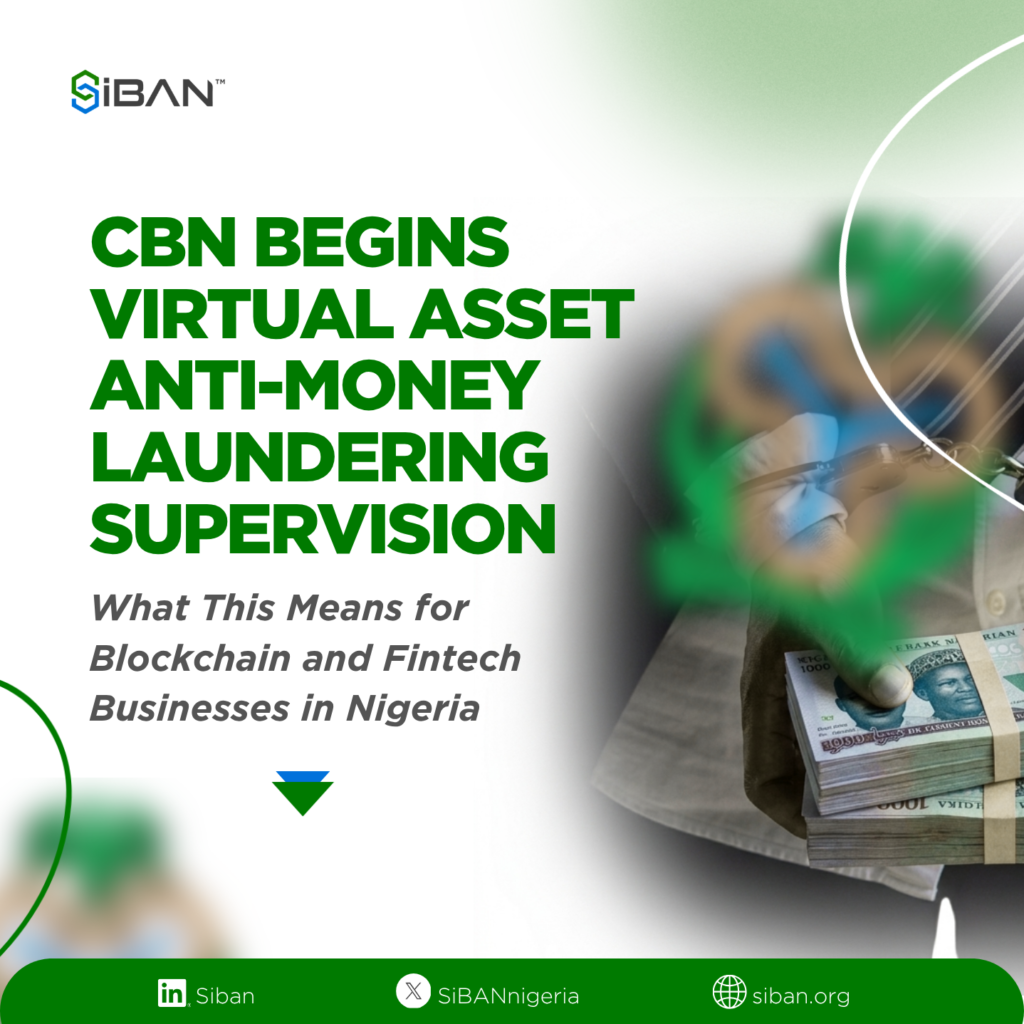
The Central Bank of Nigeria (CBN) has launched a pilot programme focused on Anti-Money Laundering (AML), Counter-Financing of Terrorism (CFT), and Counter-Proliferation Financing (CPF) supervision targeting selected Virtual Asset Service Providers (VASPs).
This move signals a shift from passive observation to structured oversight of virtual asset activities within the financial system.The initiative is part of the CBN’s broader effort to strengthen the integrity, transparency, and stability of Nigeria’s financial system as digital financial services continue to expand. For blockchain businesses, fintech operators, and digital asset innovators, this development is not just regulatory news. It is a strategic signal about the future direction of compliance, governance, and operational readiness in Nigeria.
What the CBN Has Introduced
On March 31, 2026, the CBN formally initiated a risk-based supervisory pilot designed to improve oversight of virtual asset-related activities. The programme aligns with existing legislation, including the Money Laundering (Prevention and Prohibition) Act 2022 and the Banks and Other Financial Institutions Act (BOFIA) 2020. The pilot includes a select group of companies operating within Nigeria’s digital payments and virtual asset ecosystem.
These organizations will participate in structured supervisory engagement with regulators as part of a phased implementation process.These firms were selected to help regulators better understand operational models, risk exposures, and compliance practices within the evolving digital financial landscape.
Importantly, the CBN clarified that participation in the pilot does not grant regulatory approval or licensing status. Instead, it is a supervisory mechanism designed to gather intelligence and strengthen regulatory visibility into the sector.
What Companies in the Pilot Are Required to Do
Alongside the issuance of the new standards, the Central Bank initiated supervisory engagement with selected companies across Nigeria’s digital payments and virtual asset ecosystem.
Participating organizations include:
- Flutterwave
- Paystack
- KuCoincNGN
- Juicyway
- KoinKoin
These companies represent critical infrastructure within Nigeria’s financial and digital asset ecosystem.
Their participation allows regulators to better understand:
Transaction patterns
Compliance workflows
Risk exposure models
Customer onboarding practices
Digital asset monitoring systems
It is important to note that participation in the programme does not imply licensing or regulatory endorsement.Instead, it reflects structured supervisory engagement designed to strengthen regulatory visibility and improve risk management across the financial system.
Why This Development Matters for the Blockchain Industry
For years, regulatory approaches toward virtual assets were largely cautious, driven by concerns about illicit financial flows, financial stability, and consumer protection. However, rapid adoption of digital financial services has created new operational realities that require more structured oversight.
The new supervisory framework reflects a growing recognition that financial innovation has outpaced traditional regulatory mechanisms. Rather than restricting activity, regulators are now seeking to understand and manage emerging risks through direct engagement with industry participants.
This shift has several implications:
1) Compliance Is Becoming a Core Business Requirement
Regulatory readiness is no longer optional for blockchain and fintech companies. It is becoming a foundational component of operational sustainability.
2) The Industry Is Moving Toward Formalization
Structured supervision is a key step toward building trust among investors, financial institutions, and international partners.
3) Nigeria Is Aligning with Global Standards
The pilot supports compliance with international financial crime prevention frameworks, particularly those established by the Financial Action Task Force (FATF).
Has the SEC Done This Before?
This is not the first time a Nigerian regulator has introduced structured engagement mechanisms for emerging financial technologies.The initiative allowed selected companies to operate under regulatory supervision for a limited period while regulators assessed their business models, risk controls, and compliance readiness.
The SEC later expanded this approach through its Digital Assets Rules issued in 2022, which introduced registration requirements for Virtual Asset Service Providers (VASPs) and established regulatory oversight for digital asset investment platforms.
These initiatives were designed to:
- Test regulatory frameworks
- Understand emerging technologies
- Encourage responsible innovationProtect investors
- Strengthen market oversight
The current AML supervision initiative from the Central Bank follows a similar regulatory logic.
A Strategic Question for the Ecosystem
As Nigeria’s digital asset ecosystem matures, a critical governance question is emerging:
Are Nigeria’s digital asset regulators working in coordination or in parallel?
This question matters because regulatory alignment directly affects:
Compliance efficiency
Investor confidence
Market stability
Innovation growth
Clear coordination reduces duplication and strengthens trust.
Fragmentation increases uncertainty and operational risk. As regulatory frameworks evolve, alignment between institutions will become just as important as regulation itself.
Strategic Implications for Blockchain and Fintech Businesses
For businesses operating in Nigeria’s blockchain and digital asset ecosystem, this development signals the beginning of a more disciplined regulatory environment.
Companies should begin preparing for increased scrutiny in areas such as:
- Governance and internal controls
- Customer due diligence and KYC processe
- Transaction monitoring systems
- Risk management frameworks
- Regulatory reporting mechanisms
Organizations that proactively invest in compliance infrastructure will be better positioned to scale, attract institutional partnerships, and operate sustainably within the evolving regulatory landscape.
As Nigeria’s blockchain and digital asset industry enters a new regulatory phase, collaboration between stakeholders is becoming more important than ever.
Organizations operating in this space should not navigate regulatory change alone.
Membership in the Stakeholders in Blockchain Association of Nigeria ( SiBAN) provides access to:
Regulatory engagement and advocacy
Policy updates and compliance insights
Industry collaboration opportunities
Professional development programmes
Representation in national and international policy discussions
Be a part of shaping the future of blockchain regulation in Nigeria. To become a member of SiBAN, send us an email membership@siban.org or Join the SiBAN community and let’s build together.