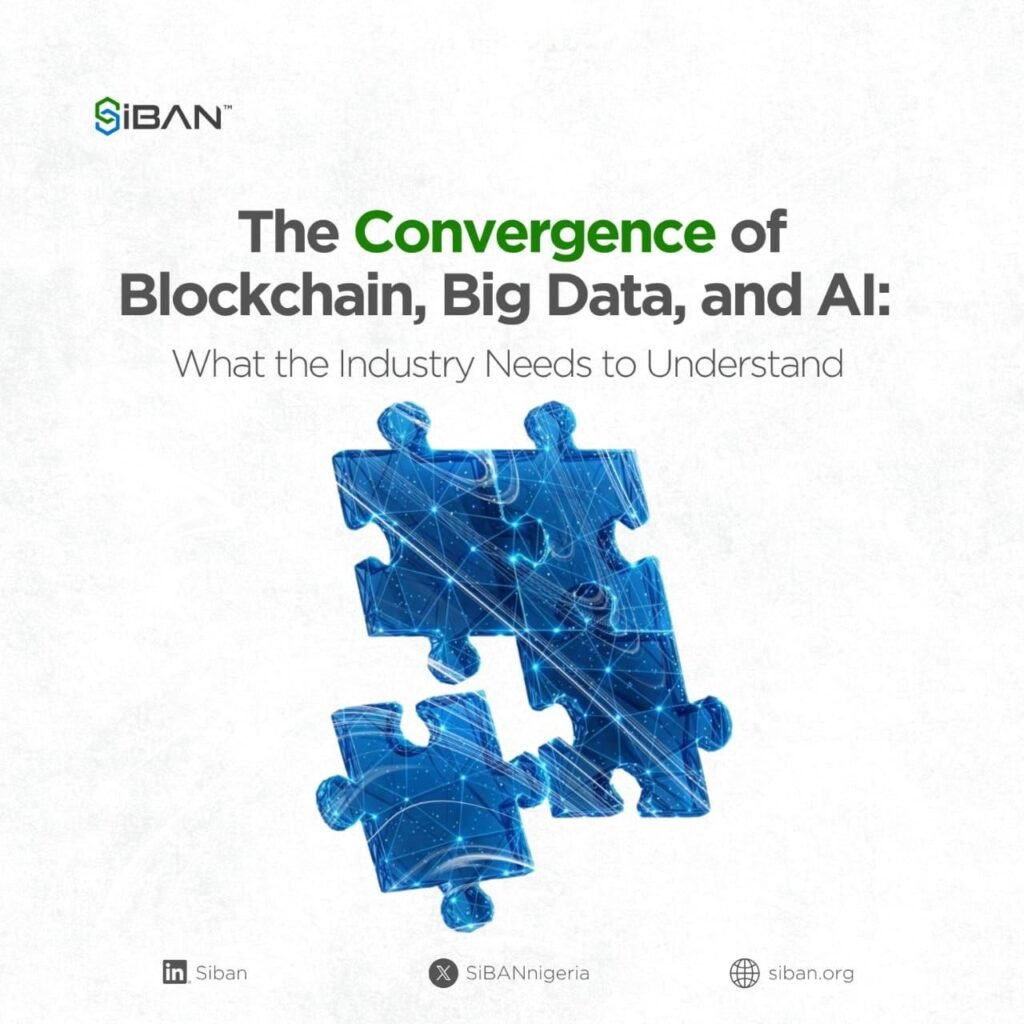
There have been numerous debates concerning how to leverage blockchain technologies in order to boost the economies of African nations and integrate them into every segment of society beginning with the use of digital currencies. However, if there is going to be a positive impact made from this technology, there is something else which is necessary to take into account as well. Each new phase of technology innovation does not consist of only one invention; rather, it involves two or more systems complementing each other. This period has arrived, as Blockchain Technology, Big Data, and Artificial Intelligence are merging and creating something unprecedented.
Those who deal with digital finance, fintech, or technology policy cannot afford to ignore this phenomenon. But to understand the full picture, we need to start with the foundation: how secure is blockchain infrastructure, really?
How Secure Is Blockchain Infrastructure And What Threats Are Being Underestimated?
Nevertheless, blockchain is believed to be immutable and tamper-proof. But as it pertains to blockchain infrastructure and applications created based on it, the story appears to be rather different. Smart contracts, user wallets, exchanges and a number of other solutions have vulnerabilities, making them easy targets for cybercriminals and hackers.
More urgent is the problem associated with quantum computing, where researchers believe that there could be as much as $2.5 trillion worth of cryptocurrencies that could become the target of quantum attacks, whereas not a single one among the world's top 20 blockchains could be said to be protected by quantum technology.
The term Q-Day describes the anticipated milestone when quantum computing technology becomes powerful enough to compromise today's encryption standards. Many experts view this as a credible threat, with predictions suggesting it could happen as early as 2028.
Not only would Q-Day mean serious trouble for those cryptocurrency holders, but it would mean disruptions and even failures of custodian services, exchanges and infrastructure.In this case, threat modeling cannot ignore such aspects as protocol vulnerabilities, logic bugs in smart contracts, wallet key exposures and issues related to the structure and functioning of exchanges themselves.
Authentications and authorizations are not additional measures anymore; they are foundational.Security alone, however, is only one dimension of the challenge. Alongside it sits an equally important question: Who Controls the Data That Powers AI.
Who Controls the Data That Powers AI and What Opportunity Does That Create for Africa?
The combination of AI with blockchain technology is bringing about one of the most significant advancements to take place in digital money. Using AI analysis, it is now possible to detect any anomalies on transaction channels in just milliseconds, compared to hours. In modern big data processing, there exists a layered structure: first, block data is extracted from full nodes and indexers; then, the data is transformed into various features such as transaction speed, ratio of approval to transfer, and graph centrality score; finally, it is scored through supervised learning, unsupervised learning, and graph neural networks.
Data is the raw material of the AI economy. However, the sharing of data at scale was long held back by issues around privacy, the lack of trust between the parties involved, and the lack of enforceability around usage agreements. This is where blockchain comes in.Marketplaces for blockchain-backed data enable data creators to turn their datasets into money while still retaining demonstrable control over how those datasets were used. Usage restrictions are enforced through smart contracts. ZKP ensures that quality can be validated without exposing the dataset itself.
There is a complete, immutable history of all access events. In the case of Nigeria, where data sovereignty has become a pressing policy issue and locally applicable training data for AI applications are sparse, these marketplaces present an opportunity on two fronts: economic and strategic.
Well-managed blockchain-powered data marketplaces operating in Nigeria would have the capacity to deliver the data necessary for AI systems to properly model the continent's linguistic, cultural, and socio-economic realities. Building such a marketplace would mean creating a market.There is an increasing number of autonomous AI agents working within blockchain networks by performing transactions, controlling wallets, and implementing smart contracts.
According to forecasts, there may be up to one million autonomous agents actively functioning in the coming years. Such a development naturally poses certain issues that require an immediate response from the industry.This takes us to what may very well be the most important aspect of this convergence.
Are Powerful Systems Being Developed in This Industry Without the Right Governance Frameworks?
Questions around governance are increasingly being asked by regulators, institutional shareholders, and citizens. Underneath these concerns are important issues related to ethics, law, and society regarding technological convergence, including the following topics: data sovereignty, biases in algorithms, financial exclusion, and the equitable distribution of the benefits created by these systems.
These need to be discussed in addition to the technical aspects, which requires the same degree of rigour that is currently applied in building these technologies. World-class infrastructure does not provide much value without governance and accountability. Creating powerful technology solutions without any governance frameworks is not innovation but risk. The technological sector knows how to develop in a responsible manner. It’s just a matter of applying the same ambitions to governance.
But where does this leave the industry?
Security flaws lead to a need for stronger privacy architecture, which enables large-scale data sharing, which powers AI, which provides blockchain accountability, and which in turn provides an environment for building regulatory trust and, by extension, sustainable growth of the digital finance ecosystem.
There is no separation here. It is one narrative one that will be dictated by the companies and institutions that understand it. These are the same organisations and policymakers that will determine the shape of digital finance on the continent and beyond.
To become a member of SiBAN, send us an email membership@siban.org, or you can also join our SiBAN Telegram community!