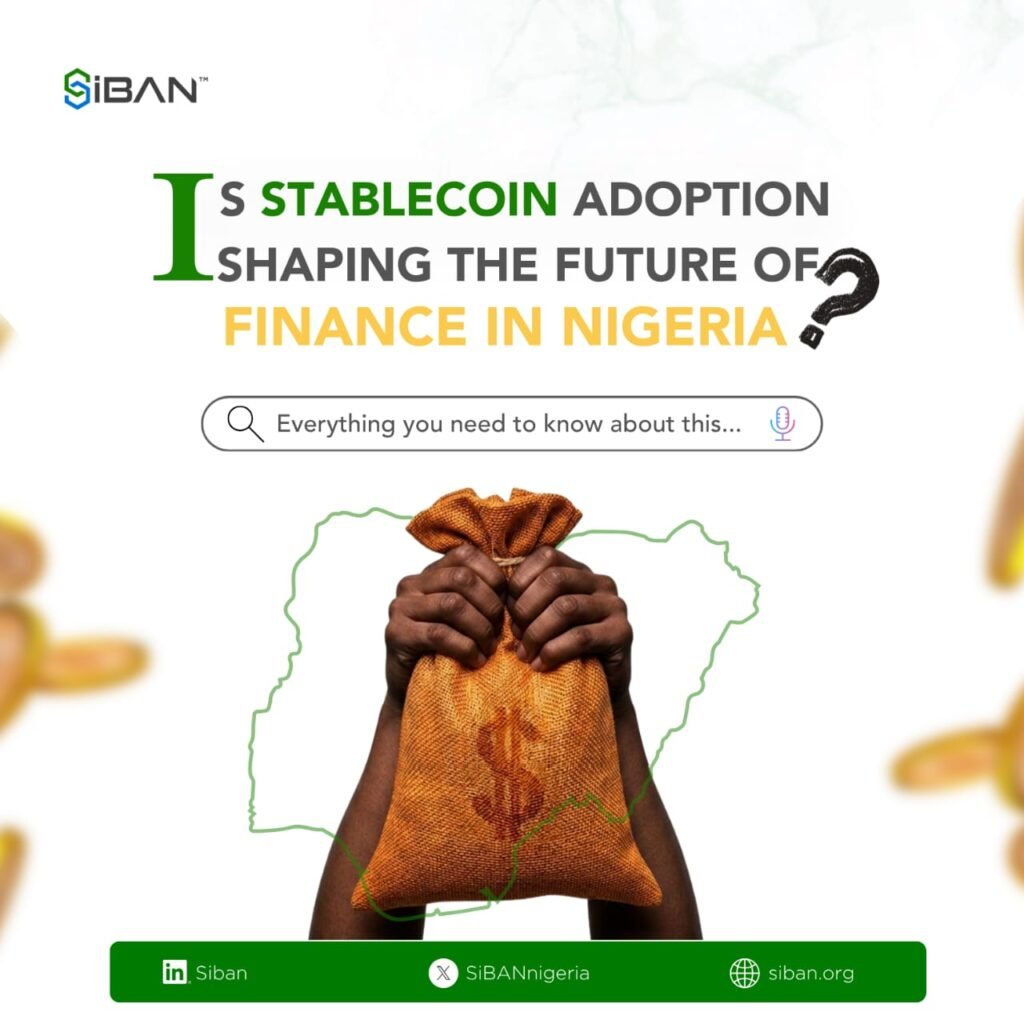
Nigeria now ranks high globally in the 2026 Crypto Adoption Index, recording an estimated $92 billion in annual on-chain transaction volume. Nigeria has also emerged as the global leader in stablecoin adoption, with new data revealing that a majority of the country's crypto users now hold dollar-backed digital assets, showing a significant shift in how Nigerians store and move money.
According to the latest 2026 Stablecoin Utility Report released by BVNK, 59% of Nigerian crypto users own Tether (USDT), while 48% hold USD Coin (USDC) which is the highest combined ownership levels globally.
What began years ago as a largely decentralised financial movement has now evolved into one of the world’s most active and regulated digital asset economies. With millions of Nigerians actively using stablecoin for payments, remittances, savings, and business transactions, blockchain technology has become deeply integrated into everyday economic activity. Between July 2023 and June 2024, Nigeria processed nearly $22 billion in stablecoin transactions, accounting for roughly 43% of all crypto volume in Sub-Saharan Africa. By mid-2025, that annual volume had grown to an estimated $92 billion.
Nigeria stands as one of the global leaders in crypto adoption, powered by a youthful digital population, increasing fintech innovation, cross-border commerce, and growing demand for alternative financial systems. What changed? How did this sector put Nigeria on the global stage?
Regulatory Frameworks and Their Impact on Stablecoin Adoption in Nigeria
For most of the last decade, Nigeria's crypto regulatory posture was defined more by what it prohibited than what it permitted. A 2021 CBN circular restricting banks from facilitating crypto transactions pushed activity into peer-to-peer markets and offshore exchanges; crypto ownership was never criminalised, but banking access was. The result was a vast, informal, largely invisible market operating at scale outside fiscal oversight. In 2025, that era formally ended.
The Investments and Securities Act (ISA 2025) was significant for the crypto ecosystem and industry as a whole. How did this policy help the industry and what shifted?
The legislation formally recognised digital assets and cryptocurrencies under Nigerian securities law for the first time.
This represented a major shift for the industry.
Under ISA 2025:
- Virtual assets gained legal recognition
- The SEC became the primary regulator for VASPs and digital asset operators
- Crypto exchanges became subject to licensing and compliance requirements
- AML and KYC obligations became mandatory
- Investor protection mechanisms became enforceable
- Fraudulent crypto investment schemes faced stricter penalties
For the first time, Nigeria’s crypto ecosystem moved from regulatory ambiguity into a structured legal framework.
This has increased institutional confidence and opened new conversations around investment, innovation, and long-term ecosystem sustainability.
How stablecoins are converting service provider settlements, remittances, and normal payments?
The most underappreciated aspect of Nigeria's stablecoin boom is not the headline transaction volumes. Stablecoins have quietly infiltrated three distinct payment layers simultaneously: service provider settlements, personal remittances, and day-to-day consumer transactions. Understanding each layer explains why total volume has scaled so rapidly, and why this adoption is structurally different from speculative crypto cycles.
Service provider settlements were the first to shift. Nigerian freelancers and agencies serving international clients software developers, designers, content creators, marketing firms found themselves trapped between a weakening naira and dollar invoices that banks struggled to process efficiently. USDT and USDC filled the gap. A developer billed in dollars by a London agency could now receive USDC directly into a non-custodial wallet, hold it at full dollar value, and convert to naira at a rate of their choosing rather than the official window rate. For B2B service exporters, this was not speculation , it was survival accounting.
Remittances represent the largest single use case by volume. Nigeria's diaspora sends home an estimated $20 billion annually one of Africa's largest corridors but traditional channels (Western Union, MoneyGram, bank wires) extract 5–9% per transfer, burning billions in aggregate fees. Stablecoin transfers collapse that cost structure dramatically: a transfer settled on-chain in USDC arrives in minutes at under 1% cost. The Mastercard–Yellow Card partnership announced in 2025 targeting Nigeria, Ghana, Kenya, South Africa, and the UAE is a direct bet on this shift, bringing institutional infrastructure to a use case that informal P2P networks had already validated at scale.
The future of stablecoin in Nigeria
Stablecoins emerged in 2014 to reduce the volatility of crypto-assets for crypto-holders who wanted to cash out of a high-value crypto-asset before it crashed. Crypto-asset values crash easily because they are highly speculative, sentiment-driven, and can be sold instantly at scale, allowing fear to trigger rapid sell-offs.
The most popular ones are US dollar-denominated USDT and USDC issued by private companies Tether and Circle, respectively. However, stablecoins were unregulated for about 10 to 11 years before the EU Markets in Crypto-assets (MiCA) regulation in 2024 During this period, there were no disclosure requirements governing these crypto-assets but there have been a lot of changes since then. What should we expect in the future?
Two layers are emerging simultaneously. The first is the cNGN, a naira-denominated stablecoin designed to anchor domestic payments in a digital form that keeps value within Nigeria's monetary system. The second is the dollar-rail layer: USDT and USDC powering cross-border trade, remittances, and treasury management for businesses that need to transact internationally.
The coexistence of these layers alongside the CBN's eNaira creates an unusually flexible monetary architecture. Domestic transactions can run on naira rails; international settlements can use dollar rails; and regulators retain visibility into both. If Nigeria can manage the tension between currency sovereignty and dollar-rail utility, it is positioned to become Africa's stablecoin clearing center.
Nigeria's combination of scale, regulatory framework, fintech depth, and cNGN's growing infrastructure gives it a realistic shot at becoming the continental hub for stablecoin settlement. The role that London plays for euro clearing or Singapore plays for Asian FX. Partnerships between Nigerian banks, African exchanges, and global payment networks are already sketching that architecture.
The next chapter of Nigerians Digital Economy
As of May 2026, Nigeria’s crypto industry has entered its most defining phase yet.
The market is larger, more influential, and more structured than ever before. Regulation is now active. Taxation is now operational. Institutional conversations are increasing. Stablecoin adoption continues growing rapidly.
The next chapter of Nigeria’s digital economy will depend on how effectively innovation, regulation, and economic opportunity can work together.
Be part of the conversations shaping blockchain innovation, policy, and the future of digital assets in Nigeria. Join Nigeria’s leading association and become part of the decision-making process.
Send an email membership@siban.org
Join our Telegram channel